Sikkim Escape: Snowy Peaks and Quaint Villages.

While West Sikkim is known for its spectacular views of Kanchenjunga, or so I'm told, I decided to head north, towards the rougher terrains and uncompromising landscapes of the mountains.
It was early March, and the weather had other plans. There was rain, plenty of fog, and mountains that appeared and disappeared behind the clouds. But sometimes, the weather adds a character of its own to a journey. And North Sikkim had plenty of surprises waiting for me.
Siliguri to Gangtok: Into the mountains.
My journey began at Bagdogra in West Bengal. I spent the night in Siliguri, a town known for its tea estates, and wandered through the local markets in the evening. The streets were alive with little shops and eateries, making it a pleasant introduction to the region.
The next morning, my driver and I set off for Gangtok, the capital of Sikkim. It was an interesting drive, taking us from the plains of Siliguri, through forest reserves and across the famous Coronation Bridge, before the landscape began to change into the rugged Himalayan gorges of Sikkim.
I stayed a night at Amritara Hidden Land, where my room overlooked the valley and the surrounding mountain range, a lovely place to unwind after the drive. But I was really looking forward to what lay ahead. The following morning, we would leave for Lachung, a small mountain village in North Sikkim.

A little thought for your itinerary: Consider spending a night in Gangtok before heading further north. The mountain drives can be long, and breaking up the journey gives you time to settle in before venturing into the more remote parts of Sikkim.
Lachung: When the mountains disappear into the mist.
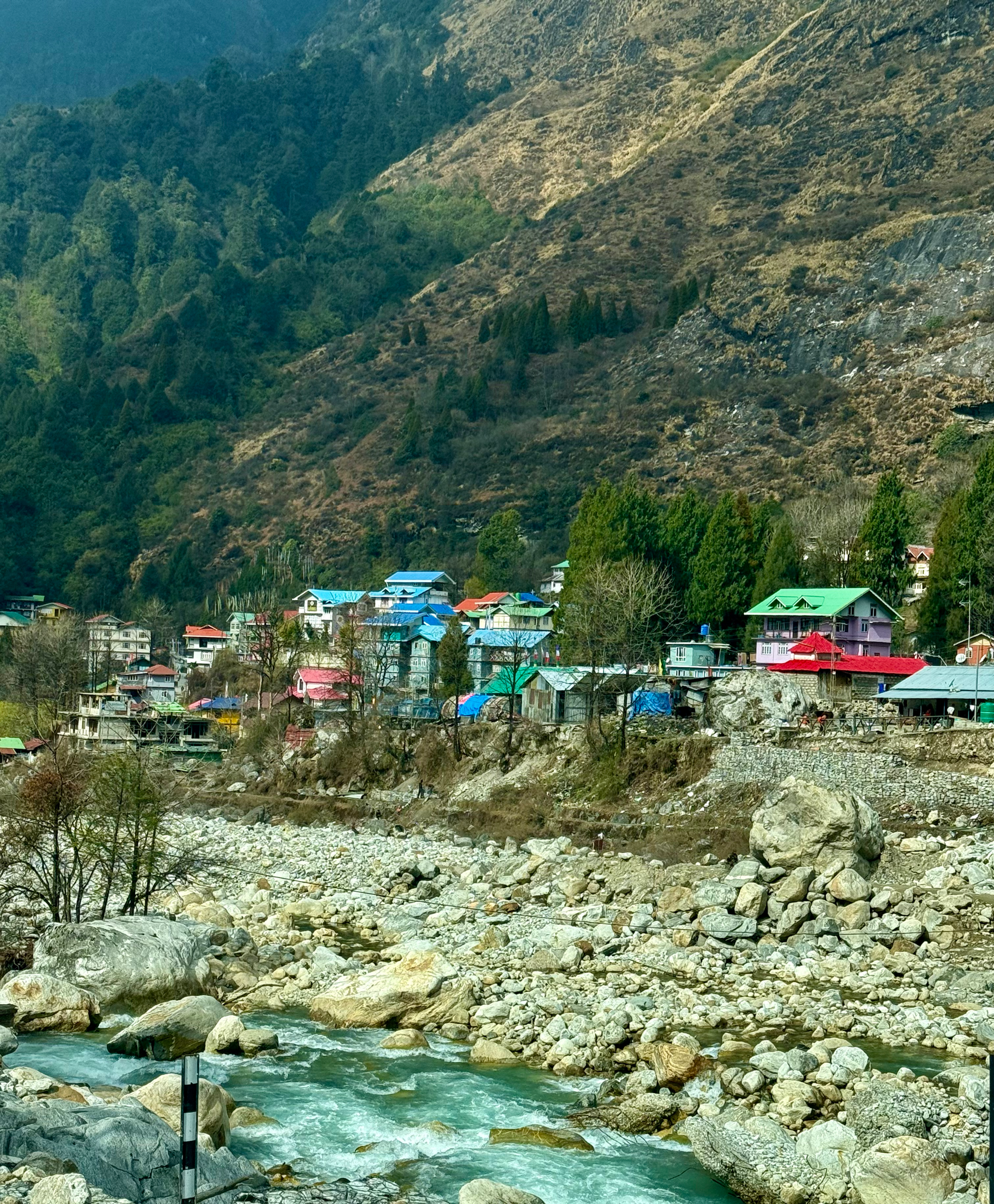
The drive to Lachung was an experience in itself. It was cold, with intermittent rain, and the mountains were almost entirely wrapped in clouds. Every now and then, a snow-capped peak would appear through the mist, only to disappear again. There was something mystical about the whole landscape.
The roads were rugged, narrow and, at times, quite daunting. After several hours of driving through the mountains, we finally reached Yashshree Lachung, one of the nicer hotels in this little village. It felt good to settle in after the long journey, surrounded by mountains that seemed to stretch endlessly into the clouds.
There is something about being in the mountains in this kind of weather. You can't always see the views you came for, but the mist, the silence and the occasional glimpse of the landscape create a different kind of experience.
Yumthang Valley: A quiet encounter with nature.
The following day, we drove to Yumthang Valley, often called the Valley of Flowers. The journey was picturesque, with the landscape opening up into beautiful stretches of mountains and valleys. Along the way, I noticed colourful prayer flags hoisted across the mountains. My driver explained their significance and how they carry prayers into the wind. At one point, alongside the River Teesta, I came across countless tall white flags fluttering in the strong winds. Watching them move against the mountain backdrop was unexpectedly peaceful.
Yumthang is known for its alpine flowers and rhododendrons, which transform the valley during the flowering season. Unfortunately, the weather meant I didn't get to see them. Perhaps another time!

Worth knowing: The flowers at Yumthang are seasonal, so the experience can vary considerably depending on when you visit. If seeing the rhododendrons is important to you, check the expected flowering period before planning your trip.
Zero Point: A world of white.
We continued towards Zero Point, the last motorable point on this route towards the Indo-China border. Famous for its snow-covered landscape, this was where the phrase white as snow suddenly made complete sense - the sheer whiteness was blinding. But it was special. I had never seen so much snow before, and standing amidst that vast expanse of white was a moment I won't forget.
And then came one of my favourite little discoveries of the day. We stopped at a tiny roadside shack for a hot plate of Maggi noodles. On an absolutely freezing day, it was possibly the most delicious meal I could have asked for!
Inside, I noticed a traditional mountain heater called a Bukhari, a wood-burning heater made of metal. What fascinated me was its dual purpose: the flat surface on top was also used for cooking food and heating water.
Simple, practical and perfectly suited to life in the mountains.
A little tip: Dress warmly, check the road conditions before setting out, and try the coffee with brandy at the Zero Point shack!
Gangtok and Tsomgo Lake: A different side of Sikkim.
Back in Gangtok, I enjoyed a relaxed evening along Mall Road, watching the town come alive after the quiet mountain villages. The following morning, I set off for East Sikkim to visit Tsomgo Lake. The drive was beautiful, with the Himalayas revealing a very different character from what I'd seen in Ladakh, further west — equally striking, yet distinct in their own way.
As we approached the lake, the road was closed for snow clearance, giving me time to wander about and soak in the raw beauty of the place. I even got to sit on a yak — that was such fun!
Tsomgo Lake reflected the dark clouds above, giving it an almost eerie appearance. Yet there was something fascinating about it — this beautiful body of water perched at around 3,700 metres, surrounded by the vastness of the mountains.
A thought for your itinerary: Tsomgo Lake and Nathu La (Pass) can be combined into a day trip from Gangtok, subject to permits and prevailing conditions. Snow and road closures can affect access, so keep your plans flexible rather than trying to fit too much into one day.

The people and little discoveries along the way.
As we drove past small villages, I noticed locals selling fresh vegetables from their farms to passing travellers. There was something lovely about seeing this everyday exchange.
My driver was one of the nicest people I met on the trip. Our conversations gave me a glimpse into life and culture in the mountains, from the discipline of driving those narrow roads to the care people took of their surroundings. Everywhere I went, I found people to be warm, polite and welcoming.
A journey I'll remember.
Sikkim exceeded my expectations, both in its natural beauty and its culture. The weather meant I missed the flowers at Yumthang Valley and the spectacular views of Kanchenjunga. But perhaps that was a sign that there was more of Sikkim waiting to be discovered — and that I would have to return.
I came away feeling grateful for the mountains, the people and the little moments along the way, knowing that there was still more to explore.
ESCAPE EDITS • TRAVEL NOTES
Planning your Sikkim escape?
A few recommendations from our journey.
Escape Edits suggested itinerary:6 nights | Exploring North & East Sikkim
Allow at least 6 nights, keeping in mind the long mountain drives and changing road conditions. If you have the time, consider extending your stay to explore Lachen, and the famous Gurudongmar Lake. | Escape Edits Hotel picks:
|
Every journey is different. At Escape Edits, we help you shape an India itinerary around your interests, pace and the kind of experiences you want to take home. Want an India trip designed around you?
Explore more at www.escapeedits.com
